
Can the world’s two largest economies avoid another trade war? The Trump-Xi Summit 2026 in Beijing offered global markets a temporary answer – and investors in tech, aerospace, and commodities reacted immediately.
The highly anticipated summit between U.S. President Donald Trump and Chinese President Xi Jinping concluded this Friday in Beijing, marking a pivotal moment for global markets. While the two-day meeting was delayed by geopolitical tensions in the Middle East, its conclusion has reinforced a fragile trade truce and provided a roadmap for bilateral relations heading into the latter half of 2026.
Despite the lack of a massive “grand bargain,” the summit yielded significant signals for investors, particularly in the tech and aerospace sectors.
Strengthening the Trade Truce and “Strategic Stability”
The primary achievement of the summit was the preservation of the trade agreement established in October 2025. This deal, which successfully lowered tariffs and eased restrictions on critical minerals, remains the bedrock of current economic relations.
President Xi proposed a framework of “strategic stability” intended to guide the two superpowers over the next three years. Analysts suggest this is a move by Beijing to transform Trump’s transactional style into a long-term, predictable operating framework.
To keep the momentum, Trump has invited Xi to the United States for a follow-up meeting on September 24, just before the current truce is set to expire.
Tech Sector Wins: Nvidia and the Chip Dilemma
Technology was the silent protagonist of the trip. The U.S. delegation featured a “who’s who” of Silicon Valley, including Elon Musk (Tesla), Tim Cook (Apple), and Jensen Huang (Nvidia).
The Nvidia Breakthrough
In a move that sent tech stocks surging, reports surfaced that Washington has cleared the sale of Nvidia’s H200 AI chips to major Chinese tech firms. However, the situation remains nuanced:
- No Formal Discussions: U.S. Trade Representative Jamieson Greer clarified that “chip export controls” were not officially discussed during the bilateral meetings to avoid political backlash from hawks in Congress.
- Market Reality: While the H200 deal is a win for Nvidia, China remains committed to domestic production, viewing U.S. high-tech dominance as a potential hurdle to their own AI growth.
Industrial Milestones: Boeing and Energy
The summit provided a much-needed boost for the American aerospace industry. Trump announced that China would order 200 Boeing jets. While this exceeded Boeing’s internal expectations of 150 units, it fell short of the 500-plane “mega-deal” some speculators had hoped for.
On the energy front, oil prices reacted positively to Trump’s claims that China has agreed to purchase U.S. oil and assist in diplomatic negotiations regarding Iran. However, official confirmation from Beijing regarding the volume and timing of these oil purchases is still pending.
The Rare Earths and Critical Minerals Factor
One of the most sensitive points of contention remains the supply of rare earth minerals, a market largely controlled by China. These minerals are essential for everything from EVs to defense systems.
The current truce has seen Chinese export levels return to “better levels,” though progress is described as slow. U.S. officials acknowledge that the West cannot “out-mine” or “out-process” China in the short term, making the extension of the current mineral agreement a top priority for the upcoming September meeting in the U.S.
Geopolitical Friction: Taiwan and Iran
While economic “wins” were highlighted, the underlying geopolitical friction was impossible to ignore.
Taiwan
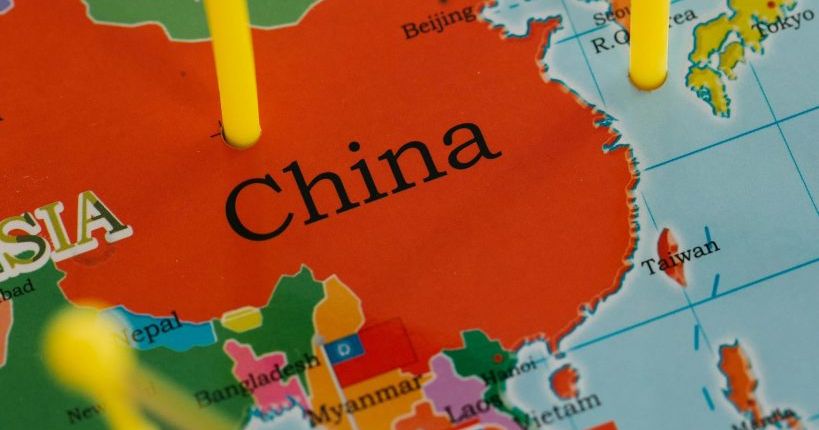
President Xi issued a stern warning that mishandling the Taiwan issue would put the entire relationship in “great jeopardy.”
Iran
Both leaders found common ground in discussing the Iran conflict, though experts warn that China’s influence may be limited by the Iranian regime’s focus on its own survival.
Why the Trump-Xi Summit Matters for Global Markets
A Unified Front
The presence of over a dozen high-profile CEOs in Beijing served as a display of economic powerhouse status. As Gary Dvorchak of the Blueshirt Group noted, the delegation demonstrated a “high level of unity” between the American government and the private sector.
While many specifics – particularly regarding chip exports and critical mineral long-term contracts – remain in flux, the Beijing summit succeeded in preventing an immediate return to a trade war, buying both nations time to navigate a complex 2026.