
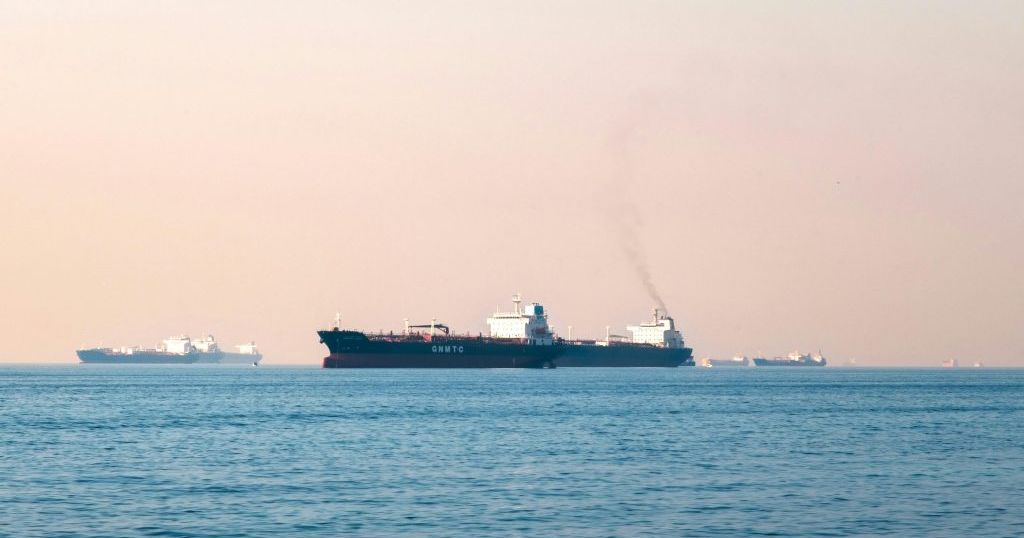
Oil prices jumped on Monday after reports that Iran had suspended indirect talks with the United States and threatened to fully block the Strait of Hormuz, one of the world’s most important energy shipping routes. The developments fueled concerns over potential supply disruptions and triggered a sharp rebound in crude markets.
The diplomatic breakdown comes despite U.S. President Donald Trump’s recent claims that Iran “really wants to make a deal.” The conflicting signals have increased uncertainty across energy markets and reversed much of the optimism that had weighed on oil prices in recent weeks.
Crude Oil Prices Leap on Heightened Geopolitical Risk
Investors reacted quickly to the growing risk of supply disruptions in the Persian Gulf, pushing crude prices sharply higher.
- Brent Crude Futures for August delivery rose 3% to $93.91 per barrel after earlier posting even stronger gains.
- West Texas Intermediate (WTI) Futures for July delivery climbed 3.6% to $90.51 per barrel.
The rally follows a steep sell-off last week, when Brent and WTI fell 11.1% and 9.6%, respectively, marking their worst weekly declines since mid-April. Traders had previously bet on a diplomatic breakthrough, but the latest developments have significantly weakened that outlook.
Iran Halts Intermediary Dialogue and Threatens Energy Chokepoints
According to Iran’s state-affiliated Tasnim news agency, Iranian negotiators will stop exchanging messages with Washington through intermediaries. The move is reportedly a response to continued ceasefire violations.
Iran stated that no negotiations would take place until Israeli forces withdraw from occupied areas in Lebanon and end military operations in both Lebanon and Gaza.
Tasnim also reported that Iran and the “resistance front” are prepared to fully block the Strait of Hormuz and activate additional maritime pressure points, including the Bab al-Mandeb Strait, a critical trade route linking the Red Sea and the Gulf of Aden.
Before the conflict began on February 28, the Strait of Hormuz handled roughly 20% of global oil shipments, with more than 100 vessels passing through the waterway each day.
Ship traffic remains heavily disrupted due to Iranian threats and a retaliatory U.S. blockade. Although some vessels have continued to transit the strait, commercial shipping volumes remain well below prewar levels. Market participants are also increasingly concerned that Tehran could seek to impose transit fees on passing ships.
Military Escalation Shatters Fragile Ceasefire
The diplomatic standoff comes as military tensions continue to rise between U.S., Israeli, and Iranian forces, further undermining the ceasefire that took effect in early April.
Recent Military Developments
U.S. Operations: Over the weekend, the United States carried out what it described as self-defense strikes against Iranian radar facilities and drone command centers in Goruk and on Qeshm Island.
Iranian Retaliation: Iran’s Revolutionary Guard responded by targeting an airbase linked to the U.S. operation. U.S. Central Command also confirmed that two ballistic missiles were launched toward American forces stationed in Kuwait.
Kuwaiti Defenses: Kuwait’s Foreign Ministry said its air defense systems successfully intercepted incoming missiles and drones, describing the attacks as a dangerous escalation.
Lebanon Front: Israel expanded its military campaign in Lebanon after Prime Minister Benjamin Netanyahu ordered additional strikes on Hezbollah-controlled areas of Beirut. The move followed the reported capture of the strategic Beaufort Castle site in southern Lebanon.
Iranian Foreign Minister Abbas Araghchi later reiterated Tehran’s position on social media, arguing that the ceasefire cannot be separated by geographic fronts.
“The ceasefire between Iran and the US is unequivocally a ceasefire on all fronts, including in Lebanon. Its violation on one front is a violation of the ceasefire on all fronts.”
Trump Hits Back at Critics Amid Stalled Negotiations
The latest setback comes days after President Trump convened a meeting in the White House Situation Room to discuss terms that could pause the four-month conflict.
The meeting ended without a final agreement. According to Axios, Trump requested several changes to the latest proposals under discussion, particularly regarding Iran’s nuclear materials.
In a Truth Social post, Trump criticized political opponents for complicating the negotiation process.
“Iran really wants to make a deal, and it will be a good one for the U.S.A. and those that are with us,” Trump wrote.
He also argued that domestic criticism makes it more difficult to negotiate and expressed confidence that an agreement could eventually be reached.
Are Investors Too Optimistic?
Despite the White House’s optimism, some analysts believe traders may be underestimating the risks facing global energy markets.
Guntram Wolff, a senior fellow at Bruegel, said investors have been overly confident that a diplomatic breakthrough is imminent.
“The fundamentals haven’t changed. Iran continues to have significant capabilities to inflict damage, it can continue to control the Strait of Hormuz, and it still has nuclear-enriched materials.”
With diplomatic channels frozen and the future of the Strait of Hormuz uncertain, oil markets are preparing for continued volatility. Unless tensions ease and shipping conditions improve, crude exports from the Persian Gulf are unlikely to return to normal in the near term.