
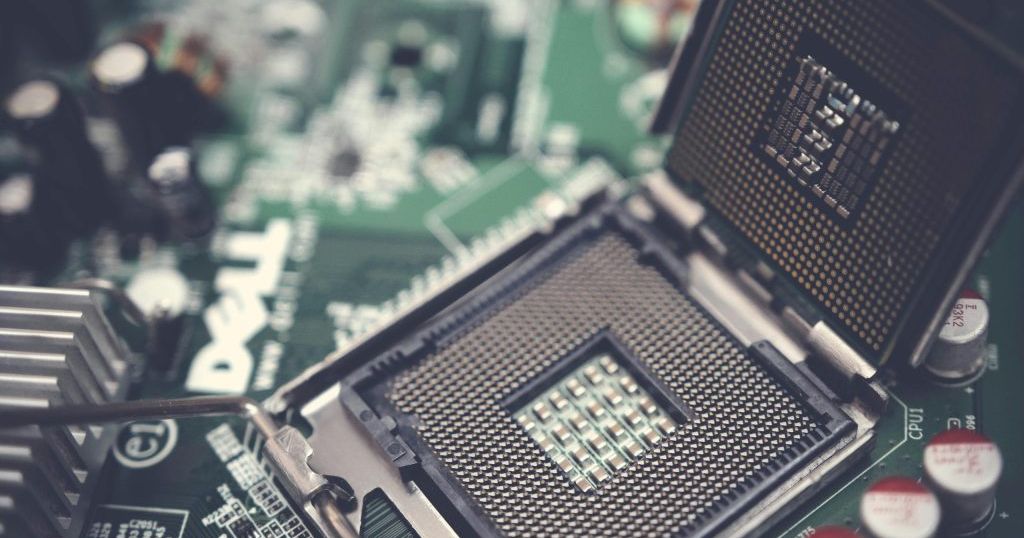
Nvidia is no longer positioning itself as just the king of AI GPUs. The company is now making an aggressive push into the global CPU market – a move that could unlock a new $200 billion opportunity while deepening its long-term ambitions in China despite mounting geopolitical pressure.
Nvidia Expands Beyond GPUs With Vera CPUs
The global semiconductor industry is undergoing a major transformation as central processing units (CPUs) regain strategic importance in the AI era. Driven by the rapid rise of agentic AI – autonomous systems capable of executing complex tasks independently – demand is expanding beyond the graphics processing units (GPUs) traditionally used to train large language models.
During a recent Wednesday earnings call, Nvidia CEO Jensen Huang told investors that the company remains well-positioned to sustain its explosive growth trajectory. Huang highlighted Nvidia’s new “Vera” central processors, which give the company access to a newly targeted $200 billion CPU market.
The expansion significantly broadens Nvidia’s addressable market and strengthens its position beyond its flagship AI accelerators, helping the company move beyond its previous $1 trillion AI chip sales opportunity forecast.
When reporters in Taipei asked whether the projected $200 billion CPU market included mainland China, Huang responded directly:
“I would think so.”
The comment signals that Nvidia continues to view China as a major long-term source of AI infrastructure demand, even as tensions between Washington and Beijing continue to complicate semiconductor trade.
Nvidia’s China Ambitions Face Regulatory Challenges
Although Nvidia sees China as a critical growth market, regulatory approvals remain a significant obstacle.
US Approves H200 Chip Export Licenses
The United States government has officially granted Nvidia licenses allowing shipments of its H200 chips – the company’s second-most powerful AI hardware platform. According to recent reports, Washington has approved roughly 10 Chinese firms to purchase the technology.
Beijing Has Yet to Approve Local Distribution
Despite receiving US export clearance, Nvidia still lacks the approvals required for local distribution inside China. Beijing continues prioritizing the development of domestic semiconductor suppliers, creating additional uncertainty for foreign AI chipmakers.
Trade Talks Deliver No Immediate Breakthrough
Recent discussions between US President Donald Trump and Chinese President Xi Jinping in Beijing – which Huang attended as part of the official US delegation – did not produce an immediate breakthrough for Nvidia’s H200 sales in China.
Speaking upon arrival at Taipei’s Songshan Airport ahead of the upcoming Computex trade show, Huang emphasized the importance of the Chinese market:
“H200 has been licensed to ship to China. It would be terrific to be able to serve that market. The Chinese market is very important. It’s very large, of course.”
So far, however, not a single H200 delivery has been made to China.
Taiwan Becomes Central to Nvidia’s AI Supply Chain
As the global AI race accelerates, Taiwan is becoming increasingly important to semiconductor infrastructure investment and advanced chip production.
Competitor AMD recently announced a strategic investment exceeding $10 billion in Taiwan’s AI sector to expand advanced chip assembly and manufacturing capabilities.
When asked about Nvidia’s own investment activity in the region, Huang suggested the company’s support for Taiwanese partners already exceeds that scale:
“We haven’t announced anything in the past, but we’ve invested in and supported our partners here far more than that.”
Nvidia is currently ramping up production of its next-generation Vera Rubin platform, which combines the new Vera CPU with the Rubin GPU architecture. The rollout is expected to create an exceptionally active second half of the year for Taiwan’s semiconductor supply chain.
While visiting Taiwan, Huang is also expected to meet with TSMC, the world’s leading contract chipmaker responsible for producing many of the advanced semiconductors powering the global AI industry.
AI Chip Smuggling and Supply Chain Risks Intensify
As advanced AI chips become strategically restricted technologies, supply chain security is becoming a growing concern for both governments and semiconductor companies.
Taiwanese prosecutors recently launched an investigation into three individuals suspected of illegally exporting high-end AI servers containing restricted Nvidia chips. The servers were manufactured by Super Micro Computer and allegedly violated strict US export control regulations.
The investigation follows a major enforcement action by the US Justice Department, which charged three individuals associated with Super Micro – including its co-founder – for allegedly smuggling at least $2.5 billion worth of restricted US AI technology into China.
When asked how Nvidia plans to prevent future diversions of its technology, Huang stated that the company continues enforcing strict compliance requirements across its distribution network. However, he also emphasized that individual partners remain responsible for their own operations:
“Ultimately, Super Micro has to run their own company. I hope that they will enhance and improve their regulation compliance and avoid that from happening in the future.”
What Nvidia’s CPU Expansion Means for the AI Industry
Nvidia’s push into the CPU market marks a major strategic shift for the company and the broader semiconductor sector. By combining Vera CPUs with its dominant AI GPU ecosystem, Nvidia is positioning itself to capture a larger share of next-generation AI infrastructure spending.
At the same time, the company must navigate increasingly complex geopolitical tensions, export restrictions, and supply chain risks – especially as China remains one of the world’s largest long-term AI markets.