
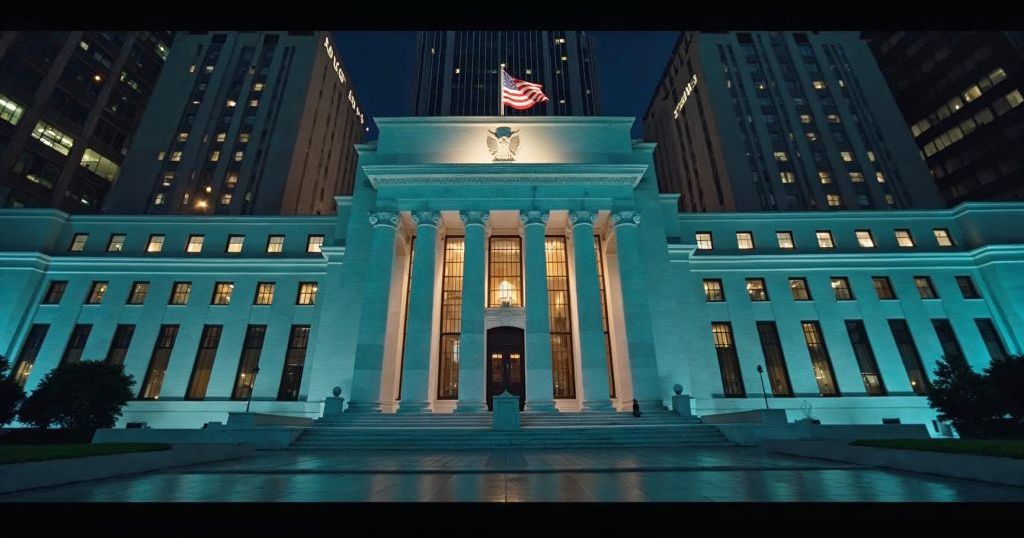
This analysis examines Global monetary policy 2026 and its implications for investors.
The New Economic Reality: A Layer Cake of Global Shocks
As 2026 progresses, the global financial landscape is being reshaped by a “layer cake of shocks.” What began as isolated economic recoveries has evolved into a complex challenge for central bankers.
Following the Iran conflict, leaders from the Federal Reserve and the European Central Bank (ECB) are warning of a dual threat: persistent inflation and slowing economic momentum. This dynamic is central to Global monetary policy 2026 and will shape decisions going forward.
Federal Reserve Outlook: Balancing Growth and Stagflation Risk
New York Fed President John Williams, a permanent voting member of the FOMC, has expressed growing concern about the war’s impact on the U.S. economy. He noted that the conflict is already “intensifying uncertainty” at both national and local levels.
Supply Shocks and Inflation Pressures
Williams warned of a potential large supply shock that could trigger stagflation – a rare combination of high inflation and stagnant growth. This risk is a key driver of Global monetary policy 2026.
- Supply Chain Strains: The New York Fed’s Global Supply Chain Pressure Index shows March levels reached their highest point since early 2023.
- Pass-through Costs: Rising costs are spreading beyond fuel into airfares, groceries, and fertilizer.
- Growth Projections: Despite risks, real GDP growth is still expected at 2%-2.5%, while inflation may remain at 2.75%-3% before returning to the 2% target by 2027.
Rates on Hold: What Markets Are Pricing In
The FOMC currently holds the benchmark interest rate at 3.5%-3.75%. Markets assign a 100% probability of a hold at the April 28-29 meeting.
While the Federal Reserve remains committed to its dual mandate of maximum employment and price stability, rate cuts are unlikely in the near term. This reinforces a cautious stance within Global monetary policy 2026.
ECB Policy Outlook: Navigating Energy and Geopolitical Risks
In Europe, the outlook is even more uncertain. ECB officials are shifting away from traditional forward guidance and adopting a meeting-to-meeting approach as they respond to incoming data.
Oil Prices and the Strait of Hormuz Impact
Joachim Nagel, President of the German Bundesbank, identified the Strait of Hormuz as a critical pressure point for the global economy. He described the outlook as “very cloudy,” with oil price volatility pushing the ECB between baseline and adverse scenarios.
Rate Hikes and Second-Round Inflation Effects
Unlike the Fed, the ECB faces stronger pressure to tighten policy:
- Anticipated Hikes: Markets expect at least 50 basis points of rate hikes, likely starting in June, bringing rates to around 2.5%.
- Second-Round Effects: Martins Kazaks warned that temporary shocks may compound, creating non-linear inflation dynamics.
- Insurance Hikes: Carsten Brzeski suggests the ECB may need “insurance rate hikes” to counter energy-driven inflation.
These factors highlight the complexity of Global monetary policy 2026 in Europe.
Fed vs ECB: Key Policy Differences in 2026
| Feature | Federal Reserve (U.S.) | European Central Bank (EU) |
|---|---|---|
| Current Rate Status | 3.5% – 3.75% (Hold) | Transitioning to “Crisis Mode” |
| Next Action Prediction | Hold through April | Likely hold in April; hike in June |
| Primary Risk | Stagflation & Supply Chains | Energy Prices & Strait of Hormuz |
| Inflation Target Goal | 2% by 2027 | 2% (vigilant on overshoots) |
Central Banks Enter a High-Uncertainty Era
According to Antonio Alvarenga, the ECB is now facing an unusually wide range of possible scenarios. Traditional forward guidance has been replaced by a reaction function approach, increasing flexibility but also market volatility.
The shared message from Williams, Nagel, and Christine Lagarde is clear: policymakers are operating under extreme uncertainty. As Lagarde emphasized, credibility depends on reacting decisively if inflation overshoots targets.
For investors, Global monetary policy 2026 signals a structural shift. The era of predictable rate paths is over, replaced by a “driving at sight” approach, where geopolitical developments – particularly in the Middle East – will dictate the next moves of the world’s leading central banks.